Table of Contents
- Comparative Economics: Cost-Per-Acquisition (CPA) Analysis
- Audience Precision and Data Ownership
- Content Longevity and Algorithm Risks
- Funnel Placement: Awareness vs. Direct Response
- Strategic Framework: Where to Allocate Your B2B Budget
Comparative Economics: Cost-Per-Acquisition (CPA) Analysis
Evaluating B2B marketing channels requires looking past vanity metrics like impressions or clicks. The true test lies in the fully loaded Cost-Per-Acquisition (CPA) of sales-qualified leads (SQLs) and closed deals. LinkedIn Ads and industry newsletter sponsorships represent two entirely different pricing mechanics, each impacting unit economics in distinct ways.
The volatility of LinkedIn CPMs
LinkedIn operates on a dynamic, auction-based pricing model. You compete against thousands of other advertisers targeting the same high-value decision-makers. This structure creates significant volatility in Cost Per Mille (CPM) and Cost Per Click (CPC).
B2B advertisers frequently see LinkedIn CPMs range from $30 to well over $100, depending on the job titles and industries targeted. During high-demand periods like Q4, enterprise buyers become more expensive to reach. Because the algorithm prioritizes user engagement alongside bid prices, underperforming ad creative directly inflates your CPC, driving up your overall CPA without warning.
Predictability in newsletter sponsorship pricing
Industry newsletters typically charge flat rates or fixed CPMs based on total subscriber count or dedicated send volume. A specialized cybersecurity newsletter might charge $2,500 for a dedicated send to 25,000 verified security directors, resulting in a predictable $100 CPM.
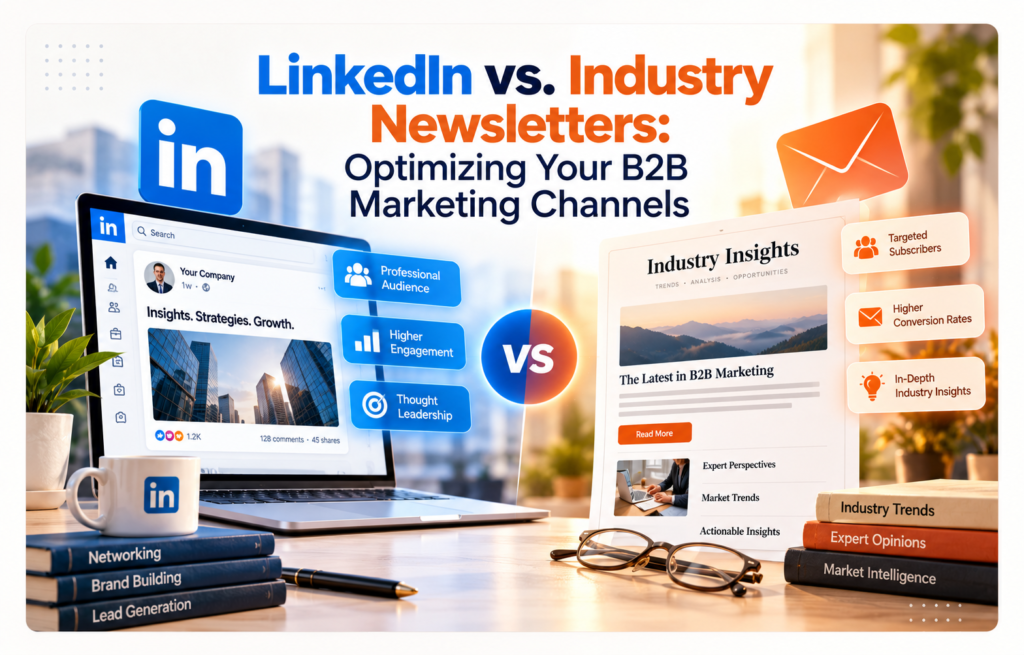
This predictability simplifies budget forecasting. Because newsletter pricing is negotiated upfront rather than dictated by a real-time auction, prices remain stable regardless of seasonal advertising demand. Metric / Feature | LinkedIn Ads | Industry Newsletters | Pricing Model | Dynamic auction (CPM/CPC) | Fixed fee or fixed CPM | | Cost Predictability | Low (subject to market shifts) | High (agreed upfront) | | Creative Needs | High volume (4-6 variations/mo) | Low (1-2 native copy placements)| | Conversion Intent | Low to moderate (interruption) | High (contextual trust)
Calculating CPA across the sales cycle
A low cost-per-lead (CPL) does not guarantee a low CPA.
Suppose a LinkedIn campaign generates leads at $60 each using a lead gen form. If only 2% of those leads convert into paying customers over a six-month sales cycle, the effective CPA for a customer is $3,000.
Conversely, a dedicated newsletter sponsorship might yield fewer total leads at a higher upfront CPL of $150. However, because the reader actively opened a focused publication aligned with their daily workflow, conversion intent is often higher. If 8% of those newsletter leads convert into closed deals, the customer CPA drops to $1,875.
Hidden costs in production and management
Calculating channel ROI requires accounting for operational overhead:
- LinkedIn Ads: Demands continuous ad creative refresh cycles to combat ad fatigue. You need dynamic ad copy, varied image assets, short-form video variants, and ongoing bid management. The labor cost of performance marketers and designers directly adds to your customer acquisition costs.
- Industry Newsletters: Requires native copy development that matches the tone of the publication. The copy is often written once, reviewed by the newsletter editor, and scheduled. Production overhead remains minimal compared to continuous social ad operations.
Audience Precision and Data Ownership
Targeting efficiency determines how much of your ad spend directly reaches decision-makers versus unqualified readers. Both channels offer precision, but they rely on different data foundations.
Leveraging LinkedIn’s professional graph
LinkedIn’s primary advantage is its professional graph. Users keep their profiles updated for career management, providing zero-party data on:
- Exact job titles and seniority levels (e.g., “VP of Supply Chain”)
- Company size, industry vertical, and precise company name lists (Account-Based Marketing lists)
- Specific professional skills, group memberships, and field of study
This setup minimizes waste. If your product only applies to DevOps Engineers at companies with 500+ employees using specific software integrations, LinkedIn can narrow its target down to that exact group.
The strategic value of newsletter subscriber lists
Newsletters trade platform targeting parameters for contextual relevance and self-selection. When a professional subscribes to a niche newsletter—such as DevOps Weekly or The CFO Journal—they explicitly signal intent and interest in that functional area.
While you cannot filter a newsletter’s subscriber base by company size as easily as on LinkedIn, the audience is already curated. The newsletter author has spent years building a targeted community, granting sponsors immediate access to a trusted ecosystem.
Data ownership and cookie deprecation
Relying entirely on third-party platforms creates structural risk for B2B marketing channels.
[LinkedIn Strategy] —-> Rented Audience —-> Algorithm Changes = Variable Reach [Newsletter Strategy] –> First-Party Data —> Direct Inbox Access = Owned Distribution
On LinkedIn, you are renting an audience. You do not own the contact details of people who view or click your ads unless they submit a form. Changes to LinkedIn’s ad policies, targeting parameters, or bidding algorithms directly impact your pipeline.
Newsletters allow advertisers to capture first-party data directly. By directing newsletter readers to gated assets, interactive tools, or direct demo requests on your website, you transfer audience equity from a third-party channel into your owned Customer Relationship Management (CRM) system. As privacy regulations tighten and third-party tracking cookies phase out, capturing first-party data through opt-in email channels becomes increasingly valuable.
Content Longevity and Algorithm Risks
How your content reaches an audience—and for how long—dictates the long-term compounding value of your media spend.
The feed decay problem
LinkedIn is built around an algorithmic feed designed to maximize user session time. Organic posts and paid ads have a short operational lifespan:
- Organic LinkedIn posts: Typically peak within 6 to 24 hours. After 48 hours, engagement drops close to zero.
- Sponsored Content: Remains visible only as long as you maintain daily budget caps. The moment spend pauses, visibility stops entirely.
This environment requires constant capital or content investment to maintain pipeline velocity.
Newsletter permanence in the inbox
Newsletters deliver content directly to an inbox, operating outside of automated social feeds. This delivery model creates two structural advantages:
- Immediate Attention: The email sits in the reader’s primary inbox alongside daily business communication, demanding an explicit action (open, archive, delete, or read).
- Archival Value: Many professionals reference, forward, or archive key newsletter editions. Sponsorships in industry newsletters often yield clicks and leads weeks—or even months—after the initial send date as subscribers review past issues or forward them to colleagues.
Mitigating platform risk through channel mix
Relying exclusively on rented social feeds exposes B2B companies to platform risk. If LinkedIn changes its ad distribution model or increases floor prices for specific industries, customer acquisition costs can rise overnight.
Platform Risk Mitigation Strategy: [Paid Social Ads] ──(Drives traffic)──> [Gated Offer / Newsletter] ──(Captures)──> [Owned CRM Database]
A balanced strategy uses LinkedIn to capture immediate demand and build broad category awareness, while simultaneously sponsoring or building newsletters to convert that attention into owned audience assets.
Funnel Placement: Awareness vs. Direct Response
Successful B2B distribution requires matching the channel to the buyer’s current stage in the purchasing journey.
TOP OF FUNNEL (Awareness) │ LinkedIn Ads: High-scale targeting, visual formats, broad reach. ▼ MID OF FUNNEL (Consideration & Trust) │ Industry Newsletters: Endorsements, deep-dive content, contextual relevance. ▼ BOTTOM OF FUNNEL (Conversion) Direct Response: Demo requests, custom calculators, free trials.
Top-of-Funnel awareness on LinkedIn
LinkedIn is an effective engine for top-of-funnel (ToFU) brand distribution and account-based retargeting.
- Broad Reach Within Target Accounts: You can run video ads, carousel posts, or thought leadership ads targeting every key decision-maker within a list of 500 target enterprise accounts.
- Retargeting Capabilities: You can build audience segments based on explicit platform interactions—such as users who watched 50% of a video or visited a pricing page—and serve them follow-up messaging over a 30-day window.
LinkedIn works best when educating the market about an unrated problem or positioning a company as a category leader before buyers actively search for a solution.
Mid-Funnel trust building via newsletters
Newsletters excel at mid-funnel (MoFU) education and direct-response lead capture.
By the time a subscriber opens an industry newsletter, they are actively seeking sector-specific insights. An ad placed alongside trusted editorial content benefits from the host publisher’s implied endorsement.
- Contextual Relevance: A message for financial consolidation software placed inside a newsletter written by a respected former CFO carries higher trust than a generic social feed ad.
- High-Intent Conversion: Newsletters are ideal for promoting specific assets that require focus: white papers, original research reports, technical webinars, or interactive ROI calculators.
Strategic Framework: Where to Allocate Your B2B Budget
Choosing how to split your budget between LinkedIn Ads and industry newsletters depends on your internal capabilities, pipeline timeline, and conversion strategy.
B2B CHANNEL SELECTION MATRIX
High Bandwidth / Tech Infrastructure │ LINKEDIN ADS FOCUS │ HYBRID STRATEGY • Immediate scale• LinkedIn for scale • Dynamic retargeting • Newsletters for trust │ • Granular ABM focus │ • Full-funnel coverage │ Low Capital High Capital │ ORGANIC / OUTBOUND │ NEWSLETTER SPONSOR • Direct outreach • High trust alignment • Content repurposing • Low management burden • Network building • Predictable CAC │Low Bandwidth / Resource Constraints “`
Step 1: Assess internal bandwidth and media operations
Execute based on the resources you have available today:
- Choose LinkedIn if: You have dedicated media buyers, designers, and web analytics specialists who can manage continuous creative updates, perform daily bid optimization, and maintain multi-stage retargeting pixels.
- Choose Industry Newsletters if: You have a small marketing team that needs to generate pipeline without managing daily ad platform mechanics. Writing one clear ad copy variant and securing sponsorships requires far fewer operational hours.
Step 2: Define your core metric (Volume vs. Quality)
Select the channel that aligns with your primary performance indicator:
- If your primary objective is Lead Volume or Total Market Reach: Allocate 70% of budget to LinkedIn. The platform’s scale allows for systematic budget scaling to support aggressive top-of-funnel quota requirements.
- If your primary objective is Pipeline Velocity and Lead Quality: Allocate 70% of budget to verified Industry Newsletters. Highly focused, contextual placements generally yield prospects that spend more time evaluating high-consideration software or services.
Step 3: Implement the hybrid allocation model
For most growth-stage B2B organizations, the most sustainable strategy combines both channels:
- Allocate 60% of paid distribution budget to LinkedIn Ads: Use this spend for hyper-targeted account-based marketing (ABM), retargeting website traffic, and running short-form video ads for category awareness.
- Allocate 30% to Niche Newsletter Sponsorships: Partner with 3 to 5 top-tier publications in your industry vertical to lock in fixed-rate placements that drive targeted traffic to key assets.
- Allocate 10% to Testing Owned Email Media: Use the converting copy and insights gained from newsletter sponsorships to launch your company’s internal recurring newsletter, turning rented ad channels into long-term owned distribution assets.
Frequently Asked Questions
Is LinkedIn advertising more effective for lead generation than newsletter sponsorships?
Effectiveness depends on your sales cycle and infrastructure. LinkedIn is better suited for geographic scale, retargeting, and precise job-title targeting through lead generation forms. However, newsletter sponsorships often generate higher-quality leads and shorter sales cycles because the placement benefits from the newsletter author’s trust and contextual relevance.
How do I measure ROI on newsletter advertising compared to social media ads?
LinkedIn uses native conversion pixels and programmatic attribution to track user conversions directly in its ad manager.
To measure newsletter ROI with equal precision, you must use tracking infrastructure, including:
- Unique UTM parameters for every link variant within the issue.
- Dedicated conversion landing pages created specifically for the newsletter’s audience.
- Custom promo codes or custom offer links tied directly to that publication.
- Self-reported attribution (“How did you hear about us?”) on your main demo forms to capture readers who convert on another device later.
Should B2B companies prioritize building an owned newsletter or a LinkedIn following?
Prioritize building an owned newsletter as a core asset. An email list represents owned first-party data that cannot be altered or restricted by external algorithm changes. Use an organic LinkedIn page and paid campaigns as distribution mechanisms to direct prospective buyers into your owned email ecosystem.
What is the average conversion rate for B2B newsletter sponsorships?
There is no universal benchmark, as conversion rates vary based on audience alignment, offer type, and landing page experience. Generally, high-performing B2B newsletters yield Click-Through Rates (CTR) between 1% and 3% on sponsored copy. Of those who click through to a dedicated landing page, conversion rates for gated content or high-value offers typically range from 5% to 15%.